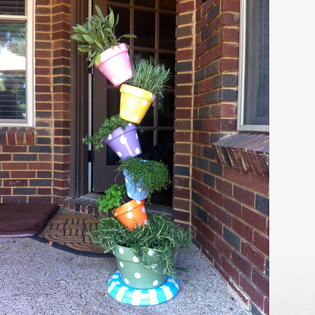
If you have been following our blog, facebook page, or our website, then you already know that we are very enthusiastic about growing vertically.
The sky is truly the limit when it comes to growing vertically with many
varieties of fruits and vegetables, and herbs are no different.
Herbs grow great in containers, and this project combines the best of
both worlds, container gardening and vertical gardening. If you have
some basic tools and handy skills, then all you really need is to get
started.
Here are the Step by Step instructions
Showing posts with label container. Show all posts
Tuesday, June 4, 2013
Monday, May 13, 2013
Build Your Own "Peek-A-Bucket" Gardening Planter
I came across this project while perusing some Facebook pages, and had to take a closer look. After reading the step by step instructions I just had to share with our gardening community.
I had to share because I think it is a very creative idea and twist to container gardening, and I know many of you out there love to grow a lot things in containers (me included).
Here are the Step by Step instructions
I had to share because I think it is a very creative idea and twist to container gardening, and I know many of you out there love to grow a lot things in containers (me included).
Here are the Step by Step instructions
Thursday, February 16, 2012
Vegetable Gardening in Small Spaces
Do not let the lack of space be a reason or an excuse to not have a vegetable garden at your home. Thousands of people are in the same situation as you and that is the space they have available to grow fresh fruits, vegetables and herbs from seeds is very limited.Maybe you live in a big city and land available is scarce, or you reside in a condominium or apartment and the only thing available to you is a patio. Either way, there are some great solutions to help you through this. You can be growing your own fresh veggies in no time.
I recently spoke with Tracy Godsey who runs the small container blog Eden’s Container. Tracy started her small space vegetable gardening adventures when growing fruits, vegetables and herbs in containers is all she could do with her limited apartment space, which consisted mainly of a balcony.
“I currently grow herbs on my patio including basil, parsley oregano, thyme, mint and chives. The basil and parsley are the only plants that won't overwinter in my containers outdoors.”, says Tracy. “In a vegetable garden, full-sized plants can grow in any pot that holds 3-5 gallons of soil. Large plants like tomatoes need 5 gallons, while plants with shallow roots like lettuce can get by in a 3 gallon pot. Even smaller plants like radishes can grow well in trays and produce a harvest very quickly. If you don't have a container handy, you can make one by filling a plastic tube (such as a garbage bag or bread wrapper) with potting soil. These types of tubes are known as grow bags.”
Tracy reminded me of a very important factor that I had not thought about and that was the weight of what you are growing. If you are on a second floor balcony where weight will be an issue, Tracy recommends, selecting smaller heirloom varieties and grow them in hanging baskets.
Just because you are limited on space does not mean you are limited on what you can grow. Remember to select fruits, vegetables and herbs that you and your family will consume. Since space is a premium you do not want to waste any with items that will get discarded. Be careful not to over water your items in containers and make sure your containers have adequate drainage holes. To protect from the loss of dirt through those drainage holes use coffee filters at the bottom or paper towels. Both options allow water to pass through but not dirt.
On a final note, “never put ordinary dirt in containers, only potting soil,” says Tracy. “You will have much better success since the soil is already formulated for growing plants in pots.”
Now it’s your turn to roll your sleeves up, get some containers, fill them with potting soil and plant the seeds of your favorite fruits, veggies and herbs. Don’t let space, or in this case, the lack thereof, prohibit you from eating fresh from the garden.
About the Author
Mike Podlesny is the author of Vegetable Gardening for the Average Person: A Guide to Vegetable Gardening for the rest of us, the moderator for the largest vegetable gardening page on Facebook and creator of the monthly Seeds Club.
| Watch the video below to learn more about Mike`s Seeds of the Month Club: |
Sunday, June 7, 2009
Tomato: Everything You Wanted to Know and More
The tomato is an herbaceous plant in the Solanaceae (flowering plants) family. Cousins to the tomato include potatoes, chili peppers, eggplant and tobacco. Yes tobacco. Although tomato plants can be grown as a perennial, it is normally grown in gardens and farms as annuals due to temperate climates.They can grow as high as ten feet but their stems are weak and require some type of stabilizations such as a tomato cage or tying them to a tall stick.
The tomato is native to South America with genetic evidence showing that its origins can be traced to the highlands of Peru.
The earliest traces of the tomato to North America are attributed to William Salmon (1868-1925), who was an American Politician that served in the 7th district of Tennessee as a member of the United States House of Representatives. It is said that he reported seeing them in a southern territory of the United States more commonly referred to today as South Carolina. Although no one is 100% sure how they came about in America, some scientists believe the species found originated somewhere in the Caribbean.
Tomatoes love heat and because they do states like Florida and California are top producers in the country due to their longer growing seasons.
According to the UN Food & Agriculture Organization, in 2008 the United States produced 111 tons of tomatoes, second only behind China who produced 311 tons, and ahead of 3rd place producer Turkey at 39 tons with a total world production of 125 million tons.
There are about 7500 different varieties of tomatoes grown in the world and vary in colors, sizes and shapes. In the United States, gardeners grow ones that are as small as the cherry tomato (1/2 inch in size) and as large as the beefsteak (4 inches in size).
Tomatoes are eaten throughout the world and have been shown in studies to aid in a healthier heart. They contain the bright red organic pigment called lycopene. Lycopene has been shown in studies to be a very powerful antioxidant and when you cook tomatoes it makes the lycopene even stronger, even suggesting to assist in preventing prostate cancer.
The tomato is enriched with Vitamins A & C, and anthocyanin (blue) another antioxidant thought to be a powerful fight against various diseases.
Due to the tomatoes high acidic content, they are easy to can whole, in pieces or in a sauce, because they can be preserved.
Though most people think of a tomato as a vegetable, it is a berry which is a subset of the fruit botanical term. Botanically speaking the tomato is the ovary part of the plant therefore it is a fruit. However, because of its high acidity and low sugar content, many do not think of it as a fruit because it is not as sweet as a fruit.
The heaviest tomato ever recorded was seven pounds twelve ounces. It was grown by a person named Gordon Graham from Edmond, Oklahoma. Although unconfirmed, the tomato tree growing in the experimental greenhouse in the Walt Disney World Resort, may be the largest tomato plant on record in the world.
Finally, what would a tomato article be without at least mentioning the Tomatina Festival? This is the big food fight festival held every year in Spain. Tens of thousands of people will gather in the town of Bunol every year and throw tomatoes at one another. How many tomatoes are used? It is estimated that over 100 metric tons of tomatoes are used every year at the Tomatina Festival.
About the Author
Michael is the author of the book Vegetable Gardening for the Average Person. It is a practical easy to follow book that teaches gardeners everything from composting techniques, aeration and frost conditions, to choosing the right tools and picking the right seeds. You can also follow him on Twitter.
Saturday, June 6, 2009
Vegetable Gardening: Succession Cropping
In the early spring, the cooler months, that is when I get my spinach, radishes and lettuce in the ground. Within a month or so I have fresh vegetables ready to be harvested. The only problem is once I pick those vegetables it leaves me empty space.Succession cropping is the process by which you plant something new, typically a warmer weather plant, into the area vacated by a cooler weather plant like those mentioned above.
When you properly plan out in advance your succession cropping you can easily three crops from the same area. For example, in the spring you plant your lettuce, then the weather warms up, spinach is done so you replace it with squash or tomatoes. As the hot summer months come to a close and it gets cooler again, you can put the spinach back in and get some more.
The possibilities are endless in regards to the combination of vegetables that you can plan out. Succession cropping comes particularly useful to those who are limited with space but want lots of fresh vegetables.
Here is a short list of vegetables that grow in cooler climates:
• Arugula
• Beets
• Broccoli
• Brussels Sprouts
• Carrots
• Escarole
• Fava Beans
• Garlic
• Kale
• Leeks
• Lettuce
• Mustard Greens
• Onions
• Radishes
• Spinach
Once the warmer weather sets in and after they have been harvested (of course), replace the empty area with warmer weather vegetables such as:
• Tomatoes (all kinds)
• Peppers (all kinds)
• Squash (all kinds)
• Egg Plant
• Beans
• Corn
• Cucumbers
• Melons (all kinds)
• Okra
• Pumpkins (start in warmer months can go through cooler months)
• Sweet Potato
As you can see you have a variety of options and combinations. If you might be thinking (if you are advanced in your gardening hobby) that you want to plant something in the warmer weather that won’t require similar nutrients as the plant that grew in the cooler months, it is best to visit the United States Department of Agriculture website and look up the nutritional information they may have for a variety of vegetable and fruit species.
I have an average sized garden, and I do my best to take advantage of the space I do have. Succession gardening gives me and can give you the added space you need without having to add more space. Combine succession gardening with raised bed gardening and potting containers, and you will see just how many more vegetables you are able to grow in the same space you currently have.
About the Author
Michael is the author of the book Vegetable Gardening for the Average Person. It is a practical easy to follow book that teaches gardeners everything from composting techniques, aeration and frost conditions, to choosing the right tools and picking the right seeds. You can also follow him on Twitter.
Subscribe to:
Posts (Atom)
