Showing posts with label herb. Show all posts

Saturday, March 8, 2014

#172: Mike talks with Carol Niec and Kerrie Rosenthal About the Seed Keeper Project


CLICK THE PLAY BUTTON TO LISTEN TO THE SHOW


The Seed Keeper CompanyIn this week's episode, Mike talks with Carol Niec and Kerrie Rosenthal about
the Seed Keeper Project.

The Seed Keeper Project, now in its 4th year, is a way to recognize the outstanding work schools are doing in getting kids from Kindergarten through 12th grade, involved in vegetable gardening.

People are noticing the fabulous work these two ladies are doing as their efforts have been recognized on a national level that is discussed in the podcast. You won't want to miss this episode!

In this episode, here’s what we’ll cover:


  • What is the Seed Keeper Project
  • Getting your school nominated
  • What your school will win if chosen in the Seed Keeper Project
  • A special prize each school will win - JUST ANNOUNCED IN THIS PODCAST!
  • Which schools are eligible
  • Where do you send your nomination
  • How you will be notified if chosen

Items mentioned in this episode include:


About this week's Guests, Carol Niec and Kerrie Rosenthal of the Seed Keeper Company:

The Seed Keeper Project is our opportunity to recognize school gardens across the country. Each year we award a Seed Keeper Home Farmer and a Certificate to a school in every state and the District of Columbia highlighting their dedication to gardening.

Beginning February 3, we will post 10 States each week for 5 weeks in alphabetical order on our
FaceBook Page The Seed Keeper Company.

During the week we ask you to nominate a K-12 school, any type of school, and post it on our FB Page.

We will draw a winner using random.org at the end of that week and announce them on our FB page.

When we send the Seed Keeper and Certificate to the winner, your name will be mentioned in the Certificate as the person who nominated the school.

We believe it our responsibility to take part in educating coming generations about the benefits of gardening and particularly growing your own food.

In the meantime, we hope you'll peruse this page where we share some of the responses and accolades our project has received ( including The U.S. Department of Education) along with the 2010 and 2011 winners lists. 2013 list coming soon!!

Tuesday, June 4, 2013

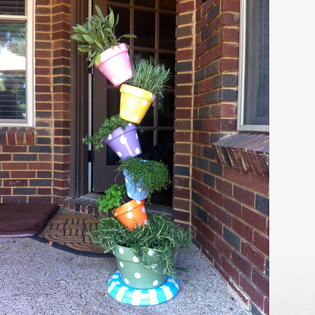
Build a Vertical Herb Planter

If you have been following our blog, facebook page, or our website, then you already know that we are very enthusiastic about growing vertically.

The sky is truly the limit when it comes to growing vertically with many varieties of fruits and vegetables, and herbs are no different.

Herbs grow great in containers, and this project combines the best of both worlds, container gardening and vertical gardening. If you have some basic tools and handy skills, then all you really need is to get started.

Here are the Step by Step instructions

Tuesday, January 3, 2012

5 Ways to Maximize the Germination Rate of your Vegetable Seeds


As a vegetable gardener you absolutely love it when the time rolls around that you can get your vegetable seeds started. However, nothing is more frustrating when the seeds you plant take either too long to germinate or in some cases, not at all. Here are 5 tips that Mike uses to help increase the germination rate on vegetable seeds. For more information on vegetable seeds be sure to visit Mike’s website athttp://www.averagepersongardening.com


About the Author

Mike Podlesny is the author of Vegetable Gardening for the Average Person: A Guide to Vegetable Gardening for the rest of us, the moderator for the largest vegetable gardening page on Facebook and creator of the Seeds Club.

Watch the video below to learn more about Mike`s Seeds of the Month Club:

Thursday, December 29, 2011

7 Ways Vegetable Gardeners Can Beat the Winter Blues


This is the time of year when those of us in the Northern hemisphere become envious of those in the southern part of the world. They are in full vegetable gardening mode, growing great tasting fruits, vegetables and herbs, from seeds and potted plants. But rest assure, even though old man winter is biting us in the a, er um, I mean rear, there is still plenty of things we vegetable gardeners can do to get us to where we start planting our indoor seeds. Here are seven that I have chosen as some of my favorites.

Organize Your Vegetable Seeds
As the owner of the Seeds of the Month Club, this one is a no-brainer for me. I have to keep our company’s seeds well organized all year round. But for many of our Seeds Club customers, and those that have purchased seeds through catalogues and online, now is a great time to organize those seeds. I find what works best for me, is to organize the seeds by variety first, i.e. tomatoes with tomatoes, cucumbers with cucumbers, etc., then organize them by date. Members of our vegetable gardening page on Facebook, take it a step further and organize by companion planting, rotations and so much more.

Learn
The weather outside might be frightful but the delightful comforts of your home is a perfect setting to research and read up on vegetable gardening topics that can enhance your skills. Want to learn more about composting? Pick up a good book on the topic and learn as much as you can. A favorite of mine that I read, is Chris McLaughlin’s book The Complete Idiot`s Guide to Composting. Chris’ book keeps composting simple yet introduces you to variety of composting styles and techniques.

Maybe you are already a compost expert and want to learn more about specific vegetable gardening techniques, tips and tricks. There are books for that as well. A search on Amazon.com will yield you plenty to choose from.

Plan the Garden
My garden plans will change more than the weather before I finalize it and start actually planting, but now would be a great time to at least put down on paper a list of vegetables you would like to grow from seed this year. A garden plan is a great way to organize your space and thoughts. As a side note I always recommend adding at least one new item to the garden that has not been tried before. I believe it keeps vegetable gardening, fun, exciting and challenging. Hopefully it will for you as well.

Soil Sample
As as long as you can still dig up your soil, now would be a perfect time to take a soil sample. Sure, it may fluctuate based on certain weather conditions but you will have a basic idea of what is in your soil, what it needs and so on. A low cost soil test kit can be found online for anywhere from $3.00 (US) up through $21.00 (US). However, if you are lucky enough to have a co-op in your area, for a small fee, you can take them some of your soil and they will run the tests for you.

Gardening Mentor
Whether you are talking to a neighbor about getting them to start a vegetable garden or you need some helpful advice yourself, the winter is a perfect time to talk about vegetable gardening. If you are a vegetable gardening enthusiast like me be sure to strike up a conversation about it with a friend or loved one who may not have a garden at all and convince them it is worth the time and effort. If everyone you know already has a garden but you had some issues last season, talk to someone in your area to see if they experienced the same thing and if they did, what did they do to fix it.

Up to this point everything has been about what you can do indoors that requires absolutely no growing or getting your hands dirty (for the most part). Is there any gardening you can do? Yes, as you will see below.

Cold Frame Gardening
Not too long ago I wrote an entire article on vegetable gardening with a cold frame. I was fortunate enough to get some professional input from the author of How to Build Your Own Greenhouse, Roger Marhsall. Roger was nice enough to share photos of his own cold frames and give us some great advice as to which vegetables you can grow. A cold frame protects vegetables from the elements and is an excellent way to do some home gardening in the colder months. You can read that article, here.

Window Sill
This one is an oldy but a goody and one of my favorites. I have been successful in the past growing such things as basil (pretty much any herb), spinach, and lettuce on my window sill. I choose a spot that receives sunlight first thing in the morning. Even if you grow only 1 or 2 items this way, it at least scratches that vegetable gardening itch you might have.

About the Author
Mike Podlesny is the author of Vegetable Gardening for the Average Person: A Guide to Vegetable Gardening for the rest of us, the moderator for the largest vegetable gardening page on Facebook and creator of the Seeds Club.

Watch the video below to learn more about Mike`s Seeds of the Month Club:

Monday, May 16, 2011

Fresh asparagus today. Yum!

Spring? Finally?

Planting season is finally here in USA Zone 5. Time to get ambitious and not forget the basics.

Be frugal. Grow from seed. Trade seeds with friends. Don’t overpay for plants from anywhere.

If you can’t resist the urge to start from plants, and didn’t start your own, spend the extra few dollars at a locally owned farm stand or garden store. Chances are, the proprietor is behind the counter and really appreciates your business.

Amend your soil. In my Clarence, NY area, a dairy farmer dries and bags cow manure, creating a high quality fertilizer for $5 per bag.

You can even go cheaper. Look for a sawmill in your town with excess sawdust of other sources of inexpensive or free organic matter.

This is the third year for my 18-by-25 foot vegetable garden in its current location. Years one and two I worked in three yards of double-screened mulch ($18 from Amherst, NY, loaded in my pickup). I also worked in half a pick-up load of horse manure (free but with a bit more weed-seed).

I also left all the leaves from my yard to rot on the garden in the fall and tilled them in when spring came. I turn the whole thing over once with my trusty spade and once with my 45-year–old Merrytiller (the best thing about it was I garbage picked it.)

This year, I worked in the aforementioned cow manure. My garden soil is luscious. In fact, I just repotted a house plant in some of it. I will use more mulch, sawdust and newspaper, to lay paths in another few weeks. Those paths will decompose and be tilled in next year.

Gardening is a never-ending experiment. Keep trying new things.

Here’s one more: Spend $3 on four tomato plants from that farm stand or grocery. Bring them home and plant them. Direct seed four tomato plants, following planting directions.

You may get an earlier yield for your $3, but total yield will be even by season end and watching the miracle is like raising your own child there is nothing better.

Another nice thing is that psychologically, no one wants to waste anything. Admit it. We’ve all done it. Pay $12 for a flat of vegetable plants. Get home. You can’t resist. You plant them too close together rather than discarding or giving away the extras. Then you end up with a lower yield and a tangled mess of tomato plants.

Grow from seed and you won’t have such worries because the psychological construct is different – you will save seed rather than over plant.

Lastly, as you do anything, keep a diary. Record mundane details like when you -planted and what the weather was like. Make notes of what you added to your soil or how the pH tested when you took it to the Cooperative Extension stand at the town farm market. It will give you an important record you can use for future reference.

Joe Genco is a contributing write for Mike the Gardener Enterprises, home for the Seeds of the Month Club. You can e-mail him at joegenco@gmail.com.

Thursday, March 10, 2011

Spring is Coming


The days are getting a little longer. In our Zone 5, Western New York neck of the woods, the sap is running. The arrowwood shrubs are red. The willow twigs are bright yellow. Snowdrops have been peaking through. It can only mean one thing. Spring will be here soon.

As long as people have been gardening, they have been chancing it, pressing their luck with the weather, sometimes with great success and sometimes not so much.

The important thing about being a “seed gardener” is you can experiment, set your own timetables and next month, if you’re like me, four new packages of seeds will appear in your mailbox. If you have a package of 30 or 60 seeds, you can experiment with 10 or 20 and still have plenty left to use.

There are two ways to stretch the front-end of the season: Indoors and outdoors. Today, we’ll talk about indoors.
Indoors, recycled containers and a sunny windowsill are a fine place to start. Also, don’t start tomatoes too soon. They will get leggy and not be as hardy. If you do make that mistake, turn them sideways at planting time and bury the stem.

The home improvements stores have eight and 10-quart bags of seed starting mix available for about $3.50. Use it for planting indoors if you don’t have soil ready to go. You can even splurge on little peat pots and seed starting trays with plastic covers. You still will end up economically ahead.
There is something awesome, however, about using your own compost, containers and soil and growing a bounty for the cost of the seeds (less than $2.50 per month).

Many seeds do fine in cooler temperature, but they will be slow to germinate, so after you have planted a container, set it somewhere warm until you see signs of growth. Artificial lights can be a great help, too.
A warming coil, available in many stores and catalogs, can offer a good assist but is not totally necessary.
Starting things indoors like broccoli, spinach and lettuce will give you a small jump. Follow the seed package instructions about how much before last frost to start, but don’t be afraid to push the limits.

Also, if you’ve decided to take a shot at a longer-season plant, like artichoke, plant now and try to get it going indoors. It may take 180 days to produce and in many areas, our growing season is too short. Still, it can be done.
The important thing is there is little risk in experimenting. Keep a garden diary with dates and specifics so you can refer back and remember what worked and what didn’t.

Joe Genco is a contributing writer to Mike the Gardener Enterprises, the exclusive home for the Seeds of the Month Club, and an avid vegetable gardener himself, who works for New England Financial as a financial services representative. You can contact him at joegenco@gmail.com.

Monday, March 7, 2011

Vegetable Gardening 1st News for Monday March 7th, 2011


Gardening classes, boot camps that will show you how to maximize vegetable production, back yard chickens, raised beds and inexpensive gardening, all make up the topics of this morning's first news in vegetable gardening.


Chester County gardening news
Penn State Cooperative Extension in Chester County will hold a workshop, "Thinking of Starting a Vegetable Garden?," for residents interested in growing their own food.
http://pottsmerc.com/articles/2011/03/04/news/green/doc4d712734e828d653407086.txt

Vegetable gardening boot camp May 1 in Milan
University of Illinois Extension's Veggie Boot Camp offers information on how to maximize fruit and vegetable production to get the most from a garden.University of Illinois vegetable and herb specialist Charles Voigt...
http://qconline.com/archives/qco/display.php?id=533747


Vegetable gardening: Raising the bed improves your odds
There is a good chance you are among the multitude considering planting a vegetable garden this year. You may find yourself wondering where to start. Over the years I have humorously said ... http://articles.chicagotribune.com/2011-02-28/classified/sc-home-0228-garden-veggie-20110228_1_local-garden-club-soil-vegetable-gardening


Toward self-sufficiency: Family fills backyard with chickens, vegetable garden

As the weather warms and the brown landscape turns green, Stephanie Weyenberg's thoughts turn to planting for her family's early spring garden.
Gardening is more than just a hobby: She and her husband, Matt, grow most of the fruit and vegetables they eat. They also rely on...


Free Spring Gardening Classes Coming Soon

It's time to think about planting tomatoes, tending to rose plants and harvesting citrus. Spring in Calabasas is afoot. Free information and advice for the novice to experienced gardener will be offered in the form of...


Gardening made easy, and deliciously inexpensive

Gagliardi is a horticulturalist for the American Horticultural Society, whose headquarters are located on land where George Washington's relatives used to farm. But like any backyard gardener, he says...

Tuesday, February 16, 2010

Italian Herb Garden - How To Establish Your Own One

If you enjoy Italian cooking, you will know that the Italians are not shy with their herbs. This is one of the best known secrets of Italian cuisine. It is not surprising either, since we can trace most of the herbs that we use today to the early gardens of Italy that were established centuries ago. But what if want to establish your own Italian herb garden?

It is not just the herbs that we identify with Italy. It is also the way that these herbs were grown in traditional gardens that is so appealing. Italian garden design, with its firm lines and symmetry, its use of water and use of sculptured foliage and statuary, has also made its mark.

So if you want to grow popular Italian herbs in a traditional-style herb garden, you will need to firstly design your garden in a formal and symmetrical way, and then plant those herbs that are commonly used for Italian cuisine. If you look at photographs of famous Italian herb gardens, you will see that there are often hedged parterres, which are ornamental beds that look just as good as the herbs that grow in them. Clipped hedges were planted to create geometric patterns, and then low-lying herbs were planted in between.

If this approach does not appeal to you, do not worry too much. There are many Italians today who favor a more casual and informal approach.

Whichever type of Italian garden you decide to plant, you do need to be sure you prepare your soil correctly and pay attention to the needs of all the herbs you are going to grow. Here are some hints that will help you to succeed.

Rosemary, which can be successfully clipped to form hedges, or grown into a bush, is a perennial, half-hardy evergreen shrub that is easy to plant from cuttings. In the right conditions, you can break off a twig, stick it in the ground and it will quickly grow into a pretty shrub. It does like well-drained soil, and it should be protected from frost.

Oregano is another perennial herb, and one that also grows in well-drained soil, in a sunny position. There are various types, all of which grow close to the ground and seem to creep. Origanum majorana (often called marjoram) is sweeter than ordinary oregano, and a popular variety for Italian food.

Sweet basil, a delicious annual herb, is a must in Italian cuisine. It is not difficult to grow and will thrive alongside rosemary and oregano. To promote new growth you will need to pinch out the little flowers before the plants mature. There are also various perennial basil plants, but they are not quite as flavorsome or soft-leafed as the annual type.

Parsley comes in a variety of guises, some of which are easier to grow than others. Flat-leafed parsley is common in Italian cuisine, but curled leaf and other types may also be used. Parsley is a biennial species that grows best in a sunny position. It should be harvested before the plant begins to flower.

Sage is yet another perennial herb, and it also likes a sunny position in well-drained soil. It is not always that prolific as the other herbs, and it should be harvested before the pretty purple flowers appear.

The perennial fennel is often grown primarily for the use of its seeds in Italian cooking. It is not a difficult herb to grow, but should not be grown near dill, because they can cross-pollinate. The fennel seeds should be gathered when they are hard and a grey-green color, and they should be left to dry indoors before you use them for cooking.

Garlic is part of the onion family and is grown from a bulb. Once you get the plant going, it will continue to produce new heads for quite some time.

Once you have established your Italian herb garden, why not learn a bit more about Italian cooking so that you can reap the full benefits from your labors?

By: Henry Thomas

Henry Thomas is an herb gardening enthusiast who has grown herbs for over 15 years and enjoys helping others get started in this amazing activity. For great information on "Italian herb garden" go to herbgardening-ultimatesecrets.com/italian-herb-garden/, or visit herbgardening-ultimatesecrets.com/. His newest book, "Herb Gardening - Ultimate Secrets", teaches beginners herb gardeners everything they need to know about.

Friday, May 15, 2009

Welcome!

This is my first post of my gardening blog! Thank you for taking the time to visit my blog as I hope to help continue your gardening education beyond my book, Vegetable Gardening for the Average Person: A guide to vegetable gardening for the rest of us, through my series of writings.

Please feel free to leave your comments here.